Solar System

Discover 8 planets and 5 dwarf planets through real mission images, little facts and a recognition quiz in English and Lithuanian.

Explore the eight solar-system planets and five IAU-recognized dwarf planets. Periods are approximate, and moon lists show selected examples.

Images are not shown at a common scale, and mission photographs may use enhanced colours. Schematics are not surface photographs; each image’s explanation accompanies its credits.

Mercury

Planet

Mercury
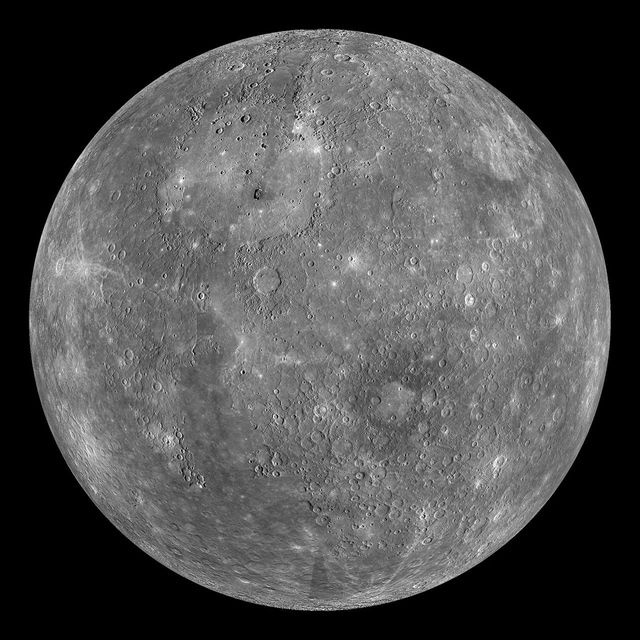
NASA/Johns Hopkins University Applied Physics Laboratory/Carnegie Institution of Washington · A globe projection of a mosaic assembled from MESSENGER photographs, rather than a single exposure.

Mercury is the smallest planet and the nearest to the Sun. Impact craters cover much of its rocky surface.

  • Despite being nearest to the Sun, it is not the hottest planet: Venus is.
  • Its extremely thin outer gas envelope retains little heat, allowing huge temperature differences between day and night.
Around the Sun
About 88 Earth days
One rotation
About 58.6 Earth days
Examples of moons
No known natural moons.

Information checked:

Image source · Image use terms

Venus

Planet

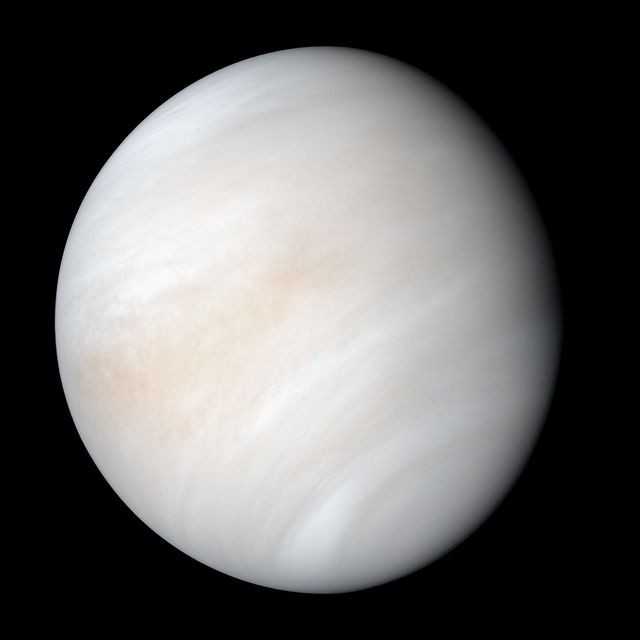
Venus
NASA/JPL-Caltech; image processing: Kevin M. Gill · Mariner 10 cloud imagery combined from orange and ultraviolet filters. False colour; the surface beneath the clouds is not visible.

Venus is the second planet from the Sun and similar in size to Earth. Its thick, carbon-dioxide-rich atmosphere traps intense heat.

  • It is the hottest planet in the solar system.
  • It rotates in the opposite direction to most planets.
  • One rotation takes about 243 Earth days, while a solar day, from one sunrise to the next, lasts about 117.
Around the Sun
About 225 Earth days
One rotation
About 243 Earth days, retrograde
Examples of moons
No known natural moons.

Information checked:

Image source · Image use terms

Earth

Planet

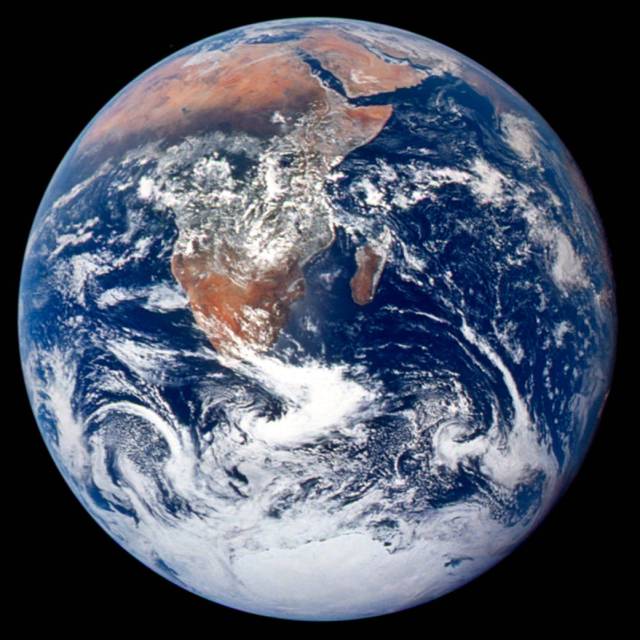
Earth
NASA/Apollo 17 crew · A photograph taken by the Apollo 17 crew in 1972. Objects in this collection are not shown at the same scale.

Earth is the third planet from the Sun and our home. Oceans of liquid water cover its surface, and its atmosphere contains oxygen important to life.

  • Oceans cover about 71 percent of Earth’s surface.
  • Earth’s tilted axis causes the seasons; changing distance from the Sun alone does not explain them.
Around the Sun
About 365.25 Earth days
One rotation
About 23 hours 56 minutes
Examples of moons
The Moon

Information checked:

Image source · Image use terms

Mars

Planet

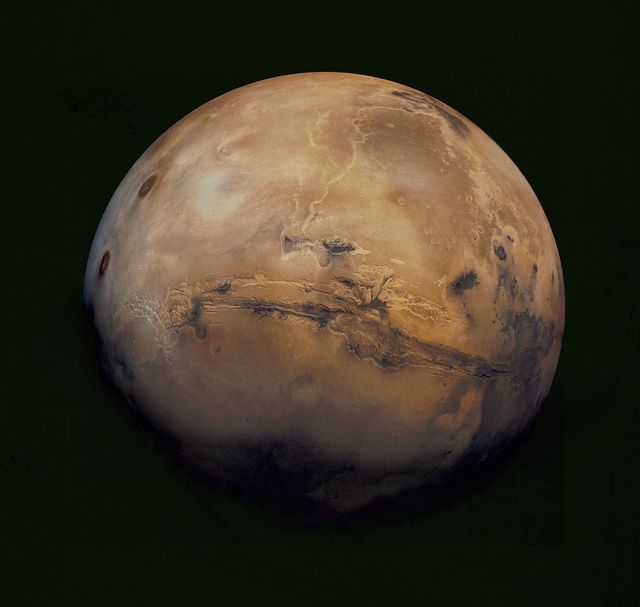
Mars
NASA/USGS · A mosaic assembled from Viking Orbiter 1 photographs, rather than a single camera exposure.

Mars is the fourth planet from the Sun, with a rocky surface and a thin atmosphere. Its landscape preserves traces of ancient rivers and lakes.

  • Oxidation of iron minerals, or rusting, gives its surface a reddish colour.
  • Olympus Mons is the largest volcano in the solar system.
Around the Sun
About 687 Earth days
One rotation
About 24.6 hours
Examples of moons
Phobos, Deimos

Information checked:

Image source · Image use terms

Jupiter

Planet

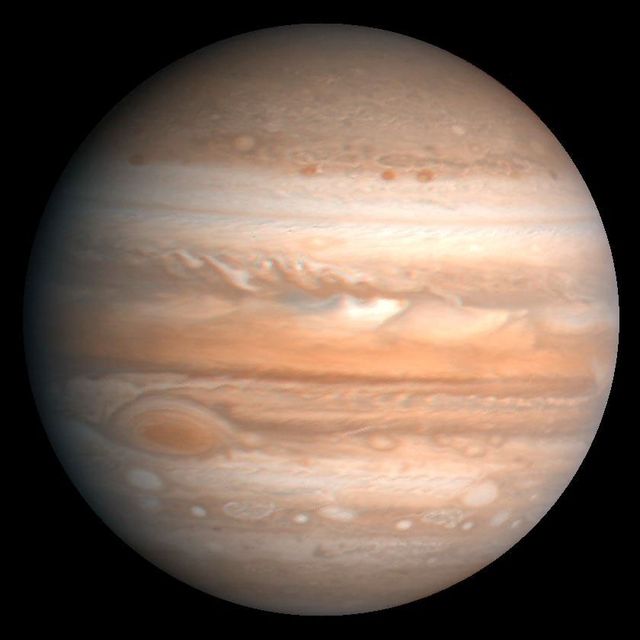
Jupiter
NASA/JPL/USGS · A Voyager 2 photograph processed by the U.S. Geological Survey. Colours are enhanced to make the cloud bands easier to see.

Jupiter is the largest planet in the solar system and fifth from the Sun. This gas giant consists mainly of hydrogen and helium.

  • The Great Red Spot is a giant, long-lived storm.
  • Ganymede is the solar system’s largest moon, while Io is known for active volcanoes.
Around the Sun
About 11.9 Earth years
One rotation
About 9.9 hours
Examples of moons
Europa, Ganymede, Io

Information checked:

Image source · Image use terms

Saturn

Planet

Saturn
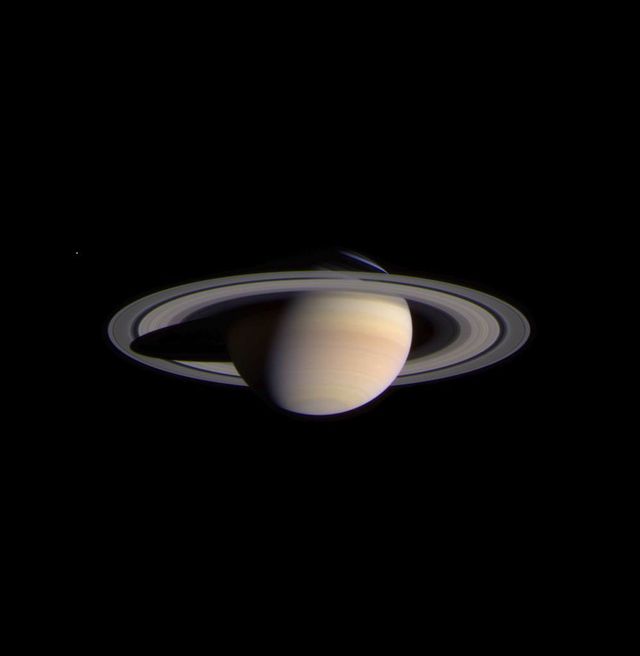
NASA/JPL/Space Science Institute · A composite of several Cassini exposures, with colours and contrast slightly enhanced.

Saturn is the sixth planet from the Sun, a gas giant with a striking ring system. Its rings contain countless pieces of ice and rock.

  • Other giant planets also have rings; Saturn is not the only one.
  • The moon Enceladus releases jets of water vapour and ice particles.
  • Titan has lakes of liquid methane on its surface.
Around the Sun
About 29.4 Earth years
One rotation
About 10.7 hours
Examples of moons
Titan, Enceladus

Information checked:

Image source · Image use terms

Uranus

Planet

Uranus
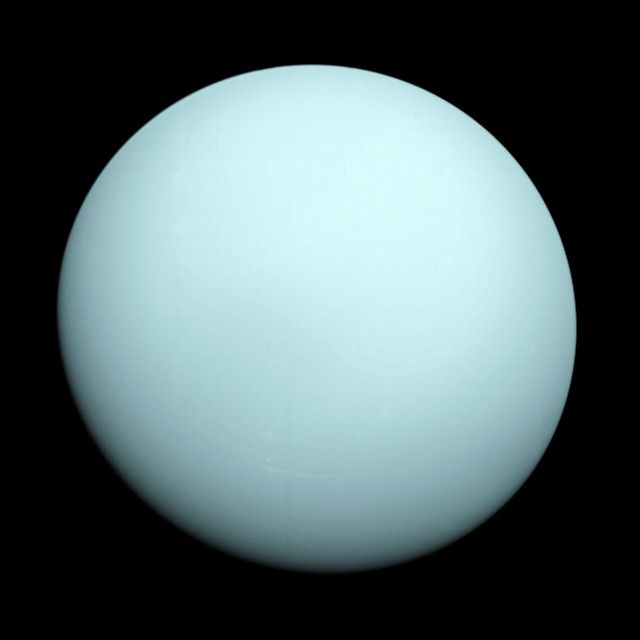
NASA/JPL-Caltech · A 1986 Voyager 2 camera image, processed for display. This is not a comparison of object sizes.

Uranus is the seventh planet from the Sun and one of the two ice giants. Atmospheric methane helps give it a blue-green colour.

  • Its axial tilt is about 98 degrees, so it spins almost on its side.
  • Its moons are named for characters in works by William Shakespeare and Alexander Pope.
Around the Sun
About 84 Earth years
One rotation
About 17 hours
Examples of moons
Titania, Miranda

Information checked:

Image source · Image use terms

Neptune

Planet

Neptune
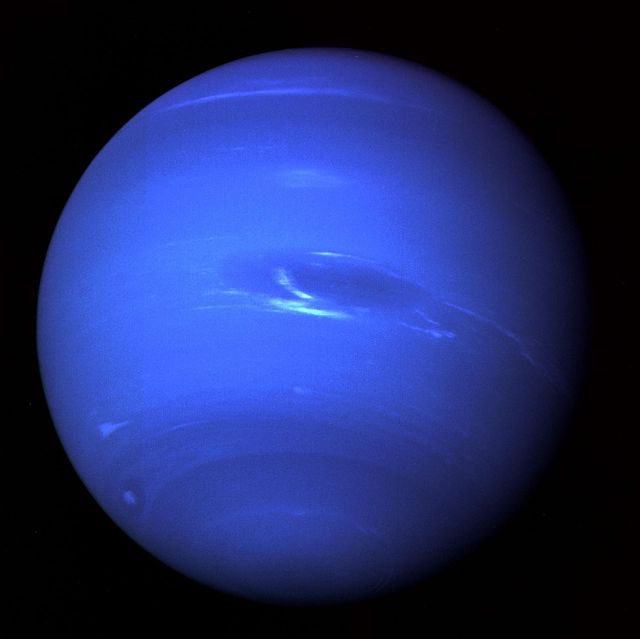
NASA/JPL · A historic Voyager 2 filter composite with enhanced blue. Its natural colour is closer to the greenish blue of Uranus.

Neptune is the eighth planet from the Sun, a distant ice giant. Extremely strong winds sweep through its cold atmosphere.

  • Mathematical predictions of its position helped astronomers find the planet in 1846.
  • Triton orbits Neptune in the opposite direction to the planet’s rotation.
Around the Sun
About 165 Earth years
One rotation
About 16 hours
Examples of moons
Triton

Information checked:

Image source · Image use terms

Ceres

Dwarf planet

Ceres
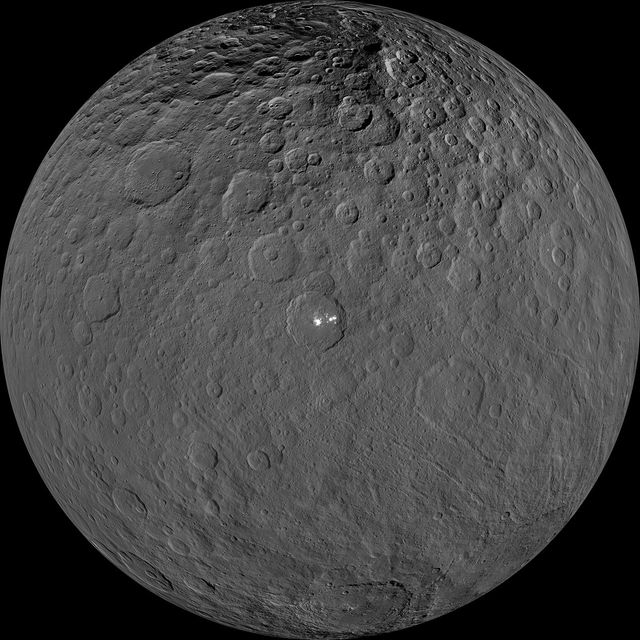
NASA/JPL-Caltech/UCLA/MPS/DLR/IDA · A globe projection assembled from Dawn photographs, rather than a single exposure.

Ceres is a dwarf planet in the main asteroid belt between Mars and Jupiter. It is the largest body in that belt.

  • Bright surface patches are deposits of salts, including carbonates.
  • In 2015, Dawn became the first spacecraft to visit a dwarf planet: Ceres.
Around the Sun
About 4.6 Earth years
One rotation
About 9 hours
Examples of moons
No known natural moons.

Information checked:

Image source · Image use terms

Pluto

Dwarf planet

Pluto
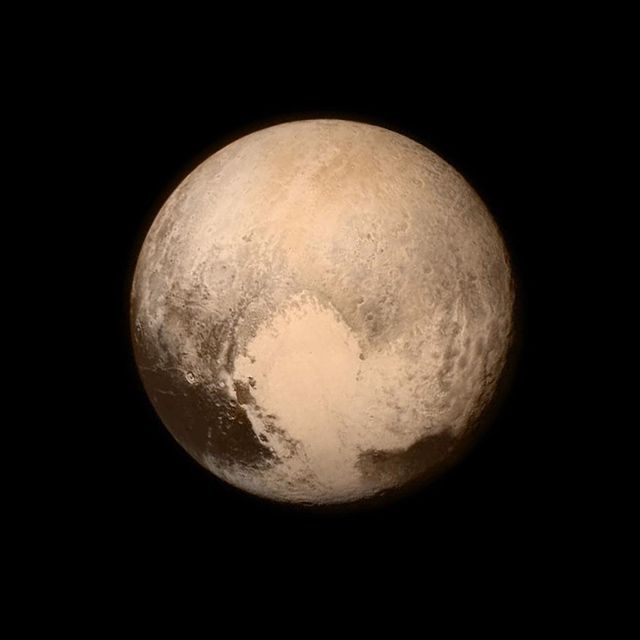
NASA/Johns Hopkins University Applied Physics Laboratory/Southwest Research Institute · A New Horizons LORRI image combined with lower-resolution Ralph colour data: a composite of separate observations.

Pluto is a dwarf planet in the distant Kuiper Belt. Its icy surface has mountains, plains and glaciers.

  • It was classified as a dwarf planet in 2006; the object itself did not change.
  • New Horizons flew past Pluto in 2015 and photographed its surface close up.
Around the Sun
About 248 Earth years
One rotation
About 6.4 Earth days
Examples of moons
Charon

Information checked:

Image source · Image use terms

Haumea

Dwarf planet

Haumea
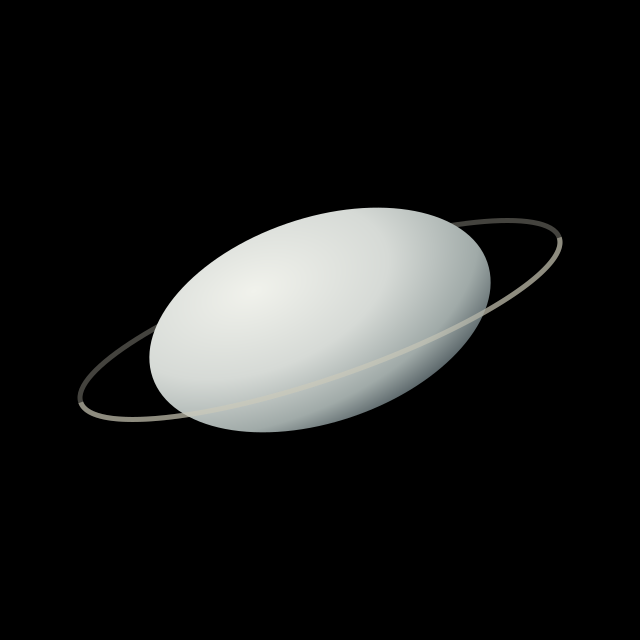
BearNap · original schematic SVG · An original BearNap schematic showing an elongated body and a narrow ring. Not a photograph; proportions and viewing angle are illustrative. The NASA link is scientific context.

Haumea is an elongated dwarf planet in the Kuiper Belt. Its unusually rapid spin is linked to its stretched shape.

  • Haumea has a ring, announced in 2017 after observations of a stellar occultation.
  • It is named after a Hawaiian fertility goddess.
Around the Sun
About 285 Earth years
One rotation
About 4 hours
Examples of moons
Hiʻiaka, Namaka

Information checked:

Scientific basis of illustration · Image use terms

Makemake

Dwarf planet

Makemake
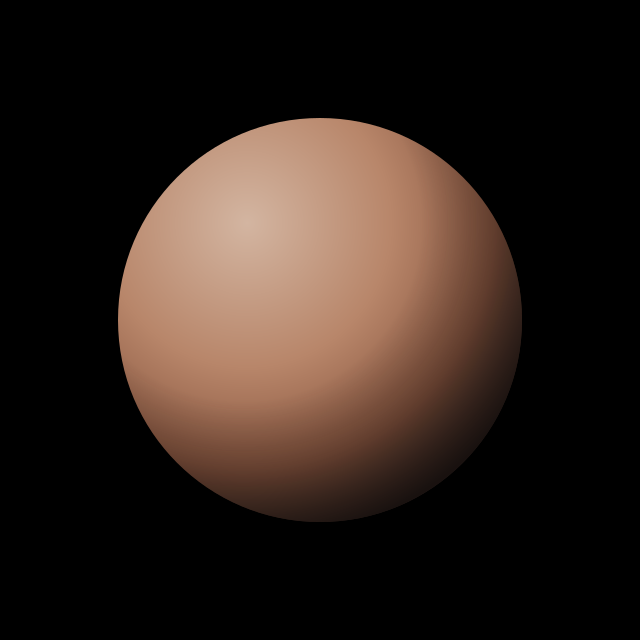
BearNap · original schematic SVG · An original BearNap reddish-brown schematic, not a photograph. No detailed surface features are represented; the NASA link supplies scientific context only.

Makemake is a distant dwarf planet in the Kuiper Belt. Its surface appears reddish-brown, with detected deposits of frozen methane and ethane.

  • Makemake was discovered in 2005.
  • Its moon carries the provisional designation S/2015 (136472) 1 and the nickname MK 2, rather than an official proper name.
Around the Sun
About 305 Earth years
Examples of moons
S/2015 (136472) 1 (MK 2)

Information checked:

Scientific basis of illustration · Image use terms

Eris

Dwarf planet

Eris
BearNap · original schematic SVG · An original BearNap schematic, not a surface photograph. Colour and lighting are illustrative; the NASA link supplies scientific context only.

Eris is a very distant dwarf planet, similar in size to Pluto. Its orbit is strongly tilted relative to the main planets’ orbital plane.

  • It was discovered in 2005 using images recorded in 2003.
  • Astronomers can use the orbit of its moon Dysnomia to determine Eris’s mass.
Around the Sun
About 557 Earth years
Examples of moons
Dysnomia

Information checked:

Scientific basis of illustration · Image use terms

Enable JavaScript for the recognition quiz. Descriptions and sources remain readable without it.

No sign-up · No ads